



Challenges
Wiggle was growing as a global eCommerce business, serving customers across multiple sports, markets, devices, and languages. The digital experience had to support a large product catalogue, regular campaign activity, international expansion, and a growing need for consistency across owned sites. The challenge was not only to design individual pages or campaigns, but to create reusable foundations that could help teams move faster while maintaining quality. Campaigns needed to scale across territories and languages. Product and marketing pages needed to work across devices. The wider site experience needed to become more consistent, accessible, and maintainable as the business grew. This created a strong need for practical design and frontend systems: reusable templates, consistent UI patterns, better HTML/CSS structure, and clearer collaboration between design, product, business stakeholders, and development teams.
My role
I started as a Technical Web Designer, co-managing and designing Wiggle’s email campaign system. I introduced new design templates that helped campaigns scale across seven languages and supported Wiggle’s international expansion. I later moved into a UI Designer role, where I was responsible for user interface design and the supporting HTML/CSS codebase across Wiggle’s global eCommerce sites. I worked closely with product owners, business stakeholders, designers, and development teams to deliver accessible, responsive, cross-platform digital experiences. One of my key contributions was helping deliver the frontend implementation of Wiggle’s rebrand across 14 owned sites. During this period, I also introduced more structured frontend methodology, including BEM, to improve consistency, maintainability, and scalability.
Approach
I focused the work around four connected areas.
1. Scaling campaign delivery
Wiggle’s campaign activity needed to support multiple brands, products, territories, and languages. I helped co-manage and design the email campaign system, introducing templates that made it easier to scale campaigns across seven languages while maintaining consistency. This supported international growth and gave the marketing and design teams a more repeatable way to deliver campaign work at speed.
2. Supporting global eCommerce UI
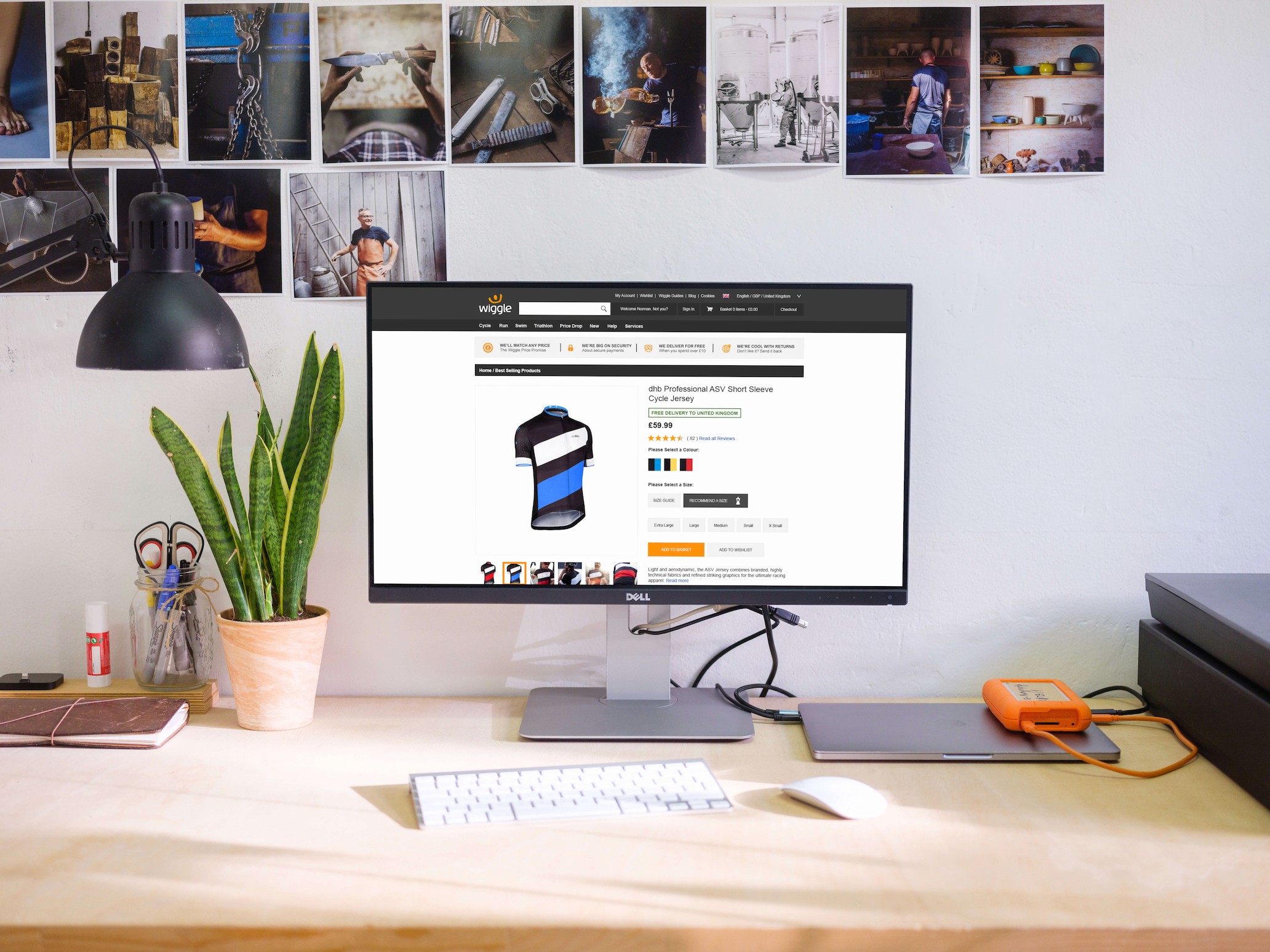
As Wiggle expanded, the product experience needed to work across devices and markets. I designed UI and contributed HTML/CSS across the global eCommerce sites, ensuring that pages were usable, responsive, and aligned with cross-platform standards. The work required a practical balance between visual design, frontend implementation, business requirements, and customer experience.
3. Delivering the rebrand across owned sites
I helped deliver the frontend implementation of Wiggle’s rebrand across 14 owned sites. This required translating the new brand direction into scalable digital execution across a large and varied eCommerce ecosystem. The goal was to create consistency without slowing down delivery across multiple teams and site contexts.
4. Introducing more maintainable frontend foundations
To support scale, I introduced BEM methodology into the frontend codebase. This helped create more structured, reusable, and maintainable CSS patterns, reducing complexity and giving teams a stronger foundation for future work.
Impact
The Player Stats system continued beyond FC24 and remained part of the EA SPORTS FC web experience for later releases. Its adaptable design system and CMS approach also helped influence similar player-stat experiences across other EA SPORTS franchises.




Final thoughts
Wiggle was an important foundation for the way I approach product design today. It gave me hands-on experience in the practical realities of scale: international markets, multiple languages, campaign velocity, responsive design, accessibility, frontend implementation, and cross-functional delivery.
It also taught me that systems are not only useful at large organisations. Even in fast-moving eCommerce environments, reusable patterns, clear frontend standards, and shared ways of working can make teams faster, more consistent, and more confident. Much of what I later carried into design systems, platform work, and product leadership started here: the belief that good design is not just the final interface, but the structure that helps teams keep delivering well.

Next projects.
(2016-25©)


3. Delivering the rebrand across owned sites
I helped deliver the frontend implementation of Wiggle’s rebrand across 14 owned sites. This required translating the new brand direction into scalable digital execution across a large and varied eCommerce ecosystem. The goal was to create consistency without slowing down delivery across multiple teams and site contexts.