


Challenges
In-game content plays a major role in keeping games fresh, expressive, and socially relevant. It expands worlds, gives players new ways to personalise their experience, and creates reasons to return. However, content delivery is often constrained by game development timelines, production capacity, and franchise-specific release cycles. This was not a problem unique to EA. Across the industry, competitors were exploring ways to expand their ecosystems by connecting games more directly to creators, communities, marketplaces, and user-generated content. The opportunity for UGX was to explore whether EA could create a more scalable ecosystem where players, creators, and game content could come together beyond the limits of traditional in-game delivery. The ambition was to create an out-of-game marketplace and content ecosystem that could support official creator content, creator codes, rewards, airdrops, player voting, real-world merchandise, in-game cosmetics, and new forms of community participation. The challenge was to turn that opportunity into something tangible enough for the business to understand, test, and build upon.
My role
I joined the innovation team as its first design hire and worked closely with our Director of Strategy to turn the UGX opportunity into a working proof of concept. My role covered product discovery, experience strategy, prototyping, UXR, stakeholder facilitation, and agency collaboration. I brought together partners from engineering, strategy, innovation, and franchise teams through workshops, case studies, cosmetic opportunity analysis, and research sessions to help define what a UGX platform could become. Because the innovation team was new, I also had to establish the way design worked inside the group. I introduced a double diamond-inspired process, rapid iteration sprints, and research-led validation loops that allowed us to move from broad opportunity spaces into more concrete product concepts. Over time, my role expanded from hands-on product design into building and leading the design capability itself. I grew the team from a single design resource into multiple design sprint teams, helped establish an internal UXR capability, and coached designers to work across web, in-game, and out-of-game experiences.
Approach
I focused the work around five connected priorities.
1. Turning the opportunity into a product concept
The creator economy opportunity was broad, so the first step was to make it tangible. I worked with strategy and innovation partners to define the core marketplace behaviours: creator content, featured drops, creator codes, rewards, player voting, official merchandise, and in-game items. The goal was to show how players could discover and support creators while giving EA a scalable way to expand content experiences beyond traditional production timelines.
2. Building prototypes for validation
I created iOS-based prototypes for the initial marketplace concept, giving stakeholders something concrete to react to and test. These prototypes helped translate a large ecosystem idea into a more understandable experience, covering discovery, storefront browsing, creator support, content drops, and reward mechanics.
3. Establishing research-led innovation
I recruited, planned, and ran UXR workshops across the program, looking at the opportunity from both the player and creator perspective. This helped ensure the work was not only shaped around business potential, but around what communities, players, and creators would actually value. This research included creator perspectives, player expectations, and the practical needs of bringing user-generated or creator-led content into EA’s ecosystem.
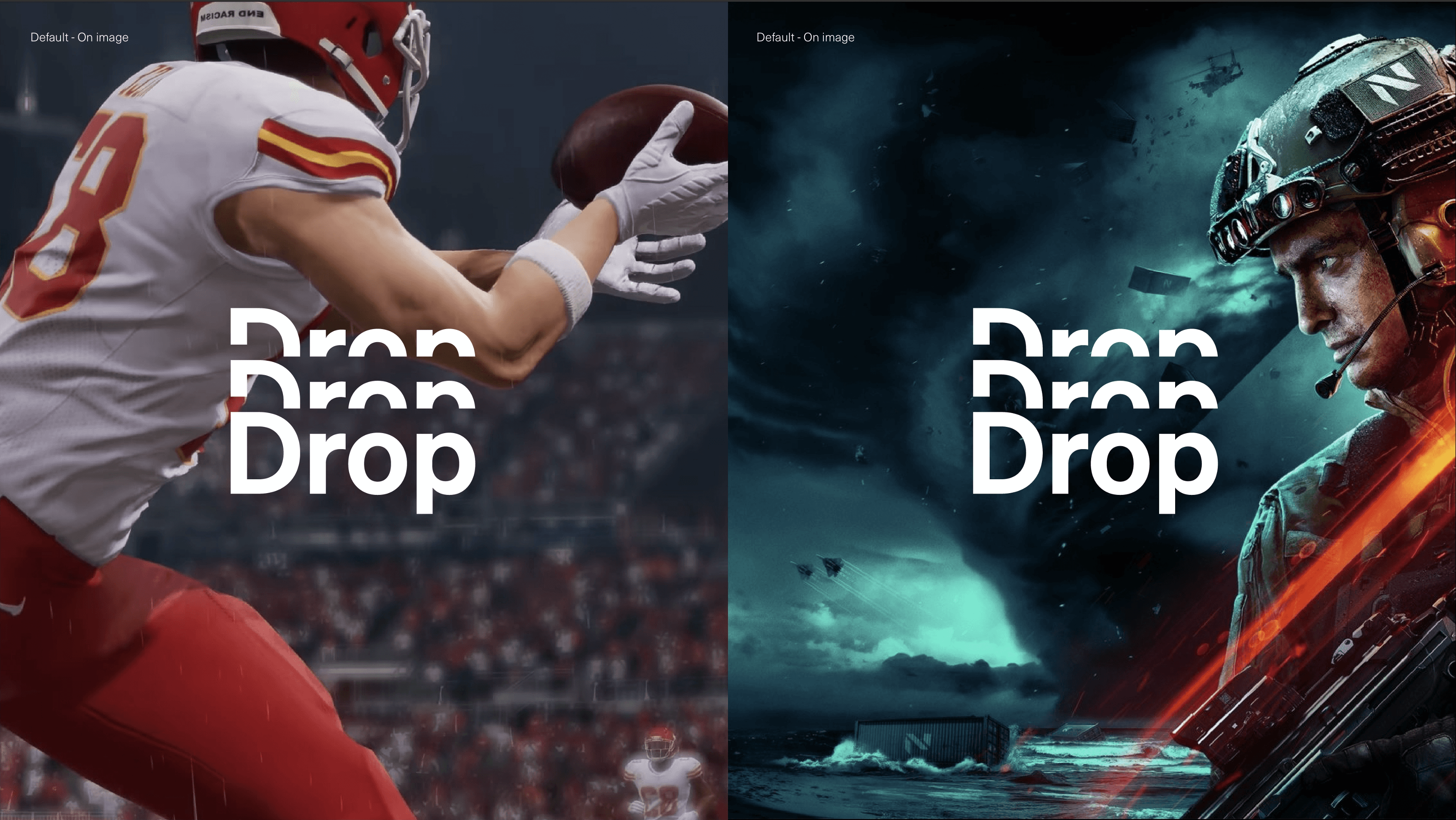
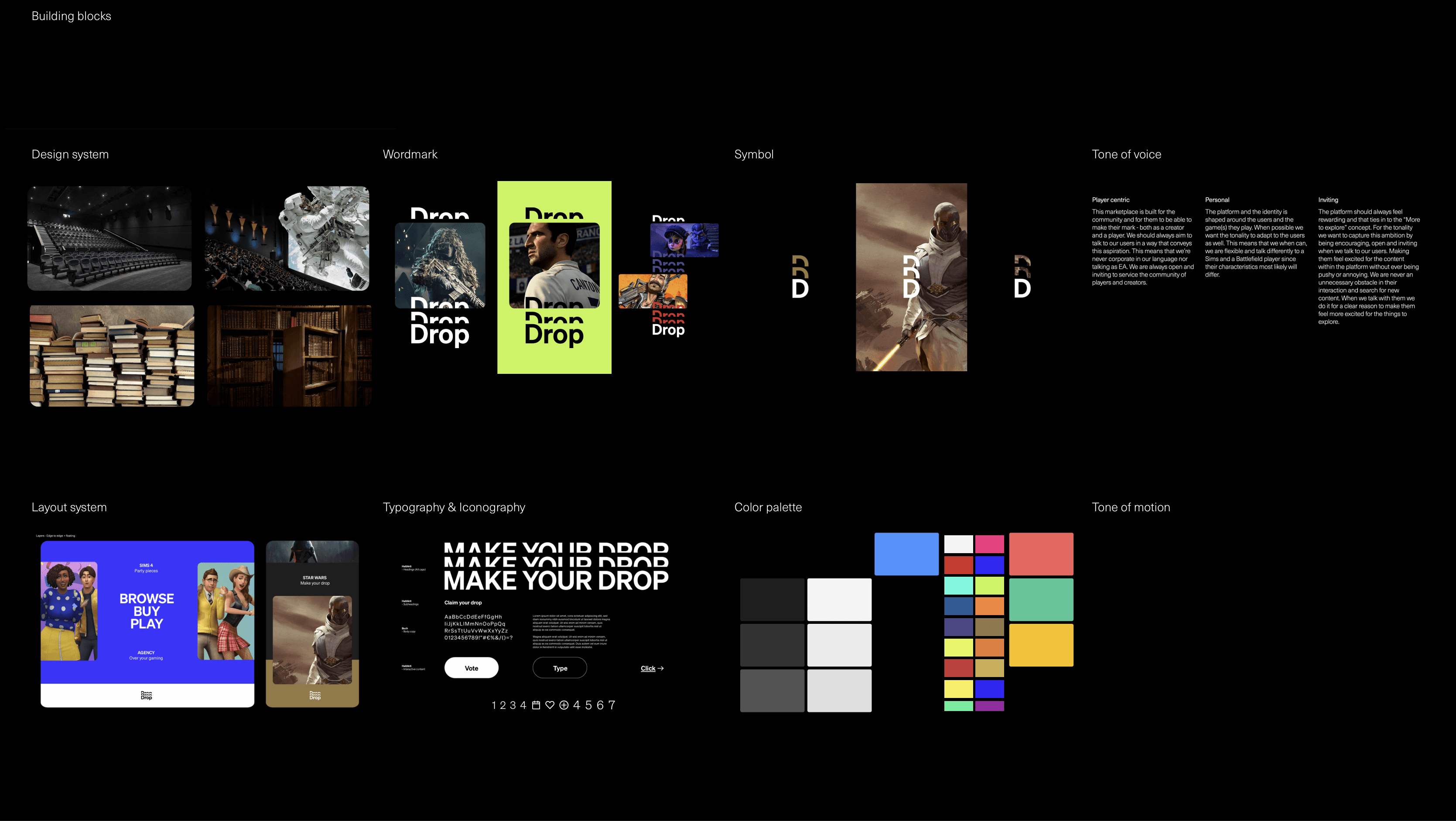
4. Creating a differentiated brand and platform direction
I managed the agency relationship with North Kingdom to explore a brand direction that could help differentiate the UGX concept from other marketplace and creator economy platforms. This gave the program a clearer identity and helped stakeholders understand it as more than a feature set.
5. Scaling from prototype to platform
The work moved through rapid iteration and eventually expanded beyond the original app concept. Within a year, the thinking began influencing EA web platforms, allowing UGX capabilities to be surfaced across multiple franchises and content experiences. What started as a marketplace prototype evolved into a broader platform strategy supporting web takeovers, real-world merchandise drops, franchise partnerships, creator programs, and content pipelines across EA SPORTS, The Sims, Skate, Battlefield, Apex Legends, and other IP.
Impact
Over three years, UGX evolved from an early innovation concept into a broader platform strategy that influenced EA’s web, merchandise, creator, and content-drop experiences. The program helped create foundations for UGX pipelines across franchises and contributed to new ways of thinking about creator-led content, player participation, and out-of-game engagement. It supported franchise exploration with teams including The Sims and Skate, and helped shape web-based experiences that could bring content drops, merchandise, community moments, and creator-focused programs closer to players. The impact was also organisational. I joined as the only design resource in the innovation team and helped grow the capability into multiple design sprint teams with a dedicated UXR function. This gave the group a more repeatable way to discover, test, validate, and deliver innovation opportunities across web, in-game, and out-of-game experiences.





Final thoughts
UGX was one of the most important learning experiences of my career because it required building both the product idea and the design capability around it at the same time.
The work started with a broad opportunity around the creator economy, but it quickly became a deeper lesson in how to create clarity inside a new innovation group. I had to establish process, build trust with strategy and engineering partners, run research, manage agency relationships, prototype ideas, hire and coach designers, and help teams become confident enough to operate independently across discovery, validation, and delivery. It also reinforced a principle that has stayed with me: innovation should not only serve the business. It has to create real value for the communities it hopes to engage. By working with both players and creators, we were able to look at the opportunity from both sides and keep the work grounded in community value, not just commercial potential.

Next projects.
(2016-25©)


3. Establishing research-led innovation
I recruited, planned, and ran UXR workshops across the program, looking at the opportunity from both the player and creator perspective. This helped ensure the work was not only shaped around business potential, but around what communities, players, and creators would actually value. This research included creator perspectives, player expectations, and the practical needs of bringing user-generated or creator-led content into EA’s ecosystem.